Danish: A Premium Script Font for Makers
The afternoon light was filtering through the window of my craft studio, casting a warm glow over the scattered wax samples and empty glass jars on my workbench. I was in the middle of designing labels for a new line of luxury soy candles, but something felt off. The standard serif fonts I had tried looked too stiff, while the casual handwritten styles lacked the sophistication needed for a high-end boutique brand. I needed a typeface that could whisper elegance without shouting for attention. That is when I discovered Danish.
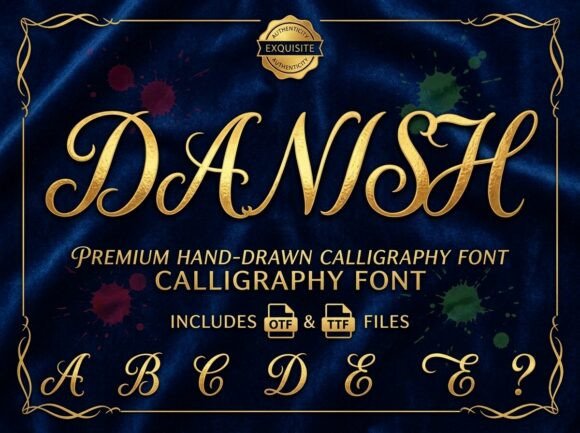
As I opened the font file, the difference was immediate. Danish is not just another script; it is an authentic calligraphy font designed to exude timeless luxury. The fluid, hand-drawn strokes mimicked the natural rhythm of a fountain pen, yet they possessed a structured grace that made them perfect for professional product labeling. What truly set it apart was the rich, gold-foil texture effect embedded within the design concept. Even in a digital mockup, the letters seemed to shimmer with an opulent quality, promising a tactile experience that customers would love.
Bringing Luxury to Handmade Candle Labels
I decided to test Danish immediately on a small batch of candle labels. My goal was to create a sense of occasion, transforming simple wax melts into giftable treasures. I typed out the scent names—"Midnight Amber," "Vanilla Bean," and "Sandalwood Mist"—and watched as the letters took shape. The way the ascenders and descenders flowed into one another created a visual harmony that felt both organic and refined.
When I printed the first draft on matte white cardstock, the contrast between the deep black ink and the paper highlighted the intricate details of the script. For the final version, I imagined these labels applied to amber glass jars with a touch of real gold foil stamping. Danish was clearly built for this kind of application. It elevates the perceived value of handmade goods instantly. In the world of packaging design, the right display font can be the deciding factor between a customer scrolling past or stopping to admire your creation.
This particular script font works exceptionally well for short phrases and titles. While it is beautiful, it is best reserved for focal points rather than long paragraphs of text. On my candle labels, I used Danish for the scent name and paired it with a clean, geometric sans serif font for the ingredients list and safety warnings. This font pairing strategy ensured that the label remained readable while maintaining a cohesive, high-end aesthetic. The simplicity of the secondary typeface allowed the ornate beauty of Danish to shine without overwhelming the eye.
Elevating Wedding Stationery and Invitations
My exploration of Danish didn't stop at candles. I moved on to a different project: wedding invitations for a client planning a rustic-chic outdoor ceremony. She wanted something that felt personal and romantic but still carried a sense of tradition. Danish fit this brief perfectly. Its character is deeply rooted in the art of calligraphy, making it an ideal choice for wedding stationery and formal announcements.
I began sketching layouts where the couple's names were rendered in large, sweeping strokes of Danish. The fluidity of the script added a human touch that pre-made templates often lack. It felt like the invitation was being written specifically for the guests, adding an emotional layer to the design. When designing editorial design pieces like invitations, the mood of the typeface dictates the entire tone of the event. Danish brought a warmth and intimacy that a rigid serif simply could not achieve.
For the body text, I again opted for a classic serif font to ensure legibility for addresses and RSVP details. This combination created a balanced hierarchy, guiding the reader's eye from the romantic headline to the practical information. Whether you are creating physical invites or digital downloads for couples to print at home, Danish offers the versatility needed to adapt to various formats while keeping the core identity intact.
Crafting Digital Printables and Wall Art
Beyond physical products, I found Danish to be a powerful tool for my digital shop. I started creating a series of printable wall art quotes focused on self-care and mindfulness. The challenge with digital art is ensuring that the design translates well from screen to paper. Danish handled this transition beautifully. The thick and thin variations in the strokes gave the letters depth, making them pop even when printed on standard home printers.
I tested the font on different backgrounds, from soft watercolor washes to stark black-and-white minimalist designs. In every instance, the gold-foil texture effect of the font design added a subtle layer of richness that elevated the entire piece. This makes it a fantastic asset for printable creators looking to offer premium-quality downloads. Customers appreciate when their digital purchases look as expensive as their physical counterparts, and Danish delivers that promise.
When preparing these files for sale, I paid close attention to the included styles and alternates. Having access to swashes and ligatures allowed me to customize each quote, ensuring no two designs were exactly alike. This level of customization is crucial for building a unique brand identity. It allows makers to stand out in crowded marketplaces by offering designs that feel bespoke rather than generic.
Practical Tips for Cutting Machines and Merchandise
As someone who frequently uses Cricut and Silhouette machines, I know that not all script fonts cut cleanly. One of the biggest concerns with decorative scripts is whether the thin lines will hold up during the weeding process. Danish proved to be surprisingly robust. While it features delicate flourishes, the main structure of the letters is solid enough to be cut from vinyl, heat transfer material, or cardstock without falling apart.
I tested a design for a tote bag featuring a single word of encouragement in Danish. After cutting the vinyl and applying it to the canvas, the result was crisp and professional. The font held its shape perfectly, and the intricate details were preserved. This makes it a viable option for merchandise such as mugs, shirts, and tote bags, provided the text is kept concise. For longer text, readability can become an issue, so it is always wise to use Danish for headlines and pair it with a more legible font for descriptions.
Before using any commercial font for products you intend to sell, it is essential to review the licensing agreement. Danish comes with clear terms regarding commercial use, which covers physical products, printables, and digital templates. Understanding these terms protects your business and ensures you are operating within legal boundaries. Always check for multilingual support if your audience is global, and verify the available file formats (OTF, TTF) to ensure compatibility with your design software.
Creating a Cohesive Brand Story
Ultimately, choosing a font like Danish is about telling a story. Every curve and stroke contributes to the narrative of your brand. Whether you are crafting handmade jewelry tags, designing seasonal holiday ornaments, or creating social media graphics, the typography you choose speaks volumes before a single word is read. Danish speaks of care, attention to detail, and a commitment to quality.
In my own journey as a maker, integrating this premium font into my workflow has transformed how I approach design. It has encouraged me to think more critically about modern typography and how it interacts with materials. From the first candle label to the latest digital template, Danish has been a reliable partner in bringing my creative visions to life. For fellow crafters and sellers looking to elevate their product presentation, investing in a versatile, high-quality script like Danish is a decision that pays dividends in customer perception and brand recognition.
As I packed up my workspace for the evening, I looked back at the stack of finished labels and printed proofs. They weren't just products anymore; they were expressions of style and craftsmanship. With Danish, the potential for creating something truly special feels limitless, inviting every maker to add their own signature flair to the world of handmade goods.